Low FODMAP Diet Guide
A Monash-verified reference for managing SIBO & IBS symptoms through diet.
What is SIBO?
SIBO stands for Small Intestinal Bacterial Overgrowth, a condition where bacteria overgrow in the small intestine instead of the colon. When this happens, these bacteria ferment the food you eat before you can digest it, producing excessive gas that leads to bloating, abdominal distention, and discomfort after meals.
How Does the Low FODMAP Diet Help?
A Low FODMAP Diet limits specific fermentable carbohydrates (Fermentable Oligosaccharides, Disaccharides, Monosaccharides, and Polyols) that feed bacteria in the small intestine. By removing high-FODMAP foods, you reduce the fuel available to overgrown bacteria, which can significantly reduce bloating, pain, gas, and fatigue, often within just a few days.
This is a temporary therapeutic diet (typically 4 to 8 weeks), not a forever way of eating. Think of it like using crutches while your gut heals. You'll eventually reintroduce foods strategically as digestion improves.
Low FODMAP Food Table
Portions listed are the Monash University verified low FODMAP safe serving sizes. Staying within these amounts keeps FODMAP intake low per sitting.
No specific items to avoid in this category.
The Balanced Plate Formula
You don't need a recipe for every meal. Build the plate from the food reference table above:
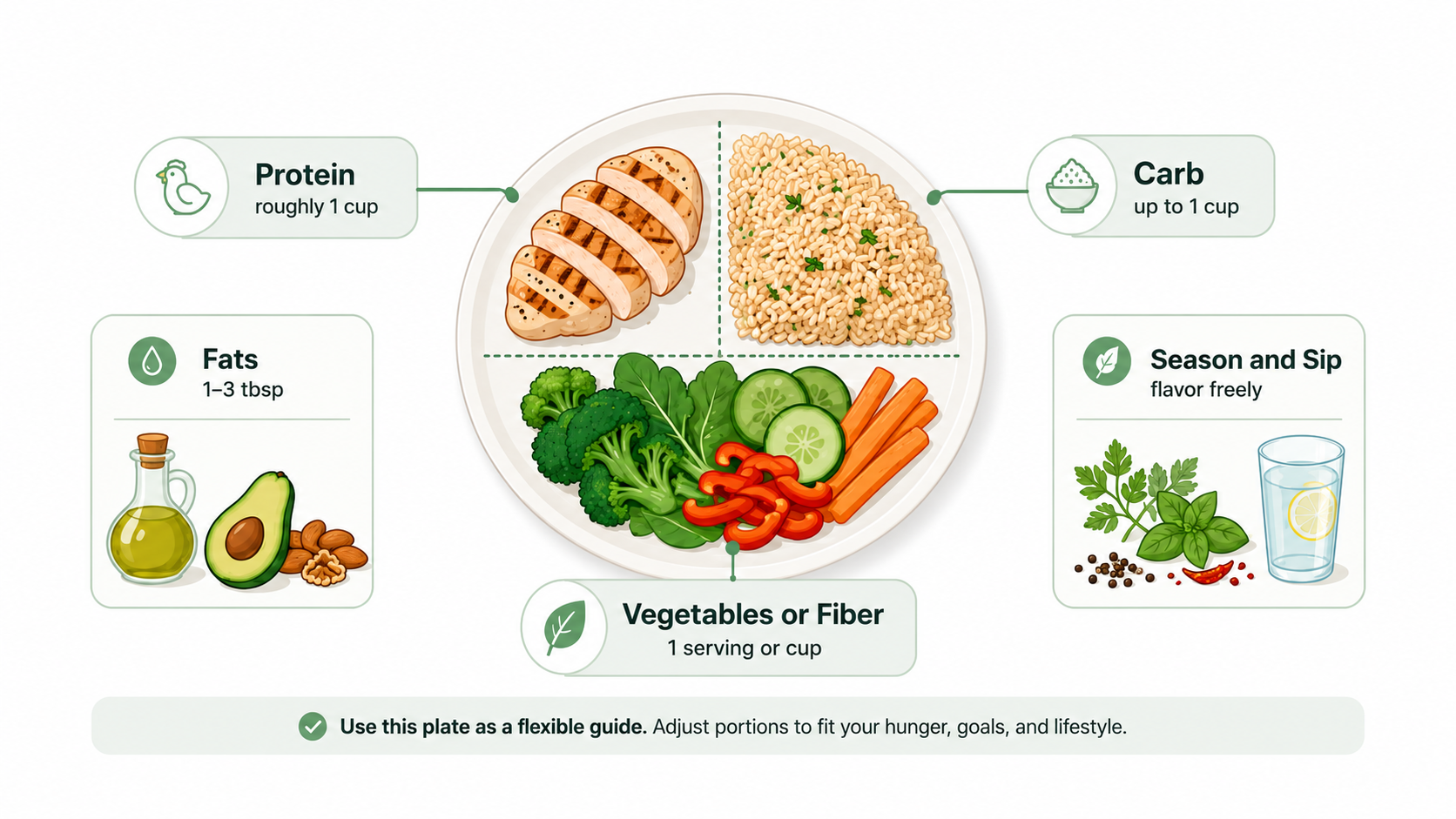
All portion sizes are based on Monash University FODMAP data. Individual tolerance may vary. Always reintroduce foods gradually under professional guidance.